- Sector-19, Fridabad-121002, Haryana, India
- +91 129 403 7300
- +91 971 759 0012
- Info@avnschoolfaridabad.com
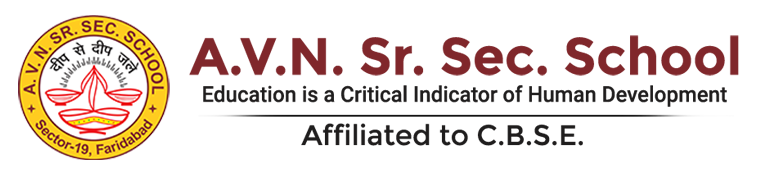
Beyond the Classroom: How Experiential Schools Bring Learning to Life

Is Scrolling Killing Your Grades? How to Use Social Media Smartly
August 4, 2026
Character Portrayal Competition – Classes I & II
August 12, 2026
Do you remember sitting in a classroom, staring at a chalkboard, and wondering, “When will I ever use this in real life?” For generations, education was largely a passive experience. The teacher spoke, the students took notes, and success was measured by how well one could memorize and regurgitate facts onto a test paper. However, the world has changed drastically. Today’s rapidly evolving, technology-driven landscape demands more than just rote memorization; it requires critical thinking, adaptability, and problem-solving skills.
Enter experiential learning—an educational philosophy that is fundamentally transforming the way students acquire knowledge. By prioritizing hands-on experiences over passive listening, experiential schools are bridging the gap between theoretical concepts and real-world application, effectively bringing learning to life.
What Exactly is Experiential Learning?
At its core, experiential learning is exactly what it sounds like: learning through experience. Rooted in the theories of educational psychologists like David Kolb and John Dewey, it is a cyclical process. Students engage in a concrete experience, reflect on what happened, conceptualize the abstract principles behind it, and then actively experiment with their new understanding.
Think about how we learn to ride a bicycle. You cannot learn to balance on two wheels by reading a textbook about physics or listening to a lecture on momentum. You have to get on the bike, pedal, lose your balance, fall, and try again. Experiential schools apply this exact same logic to mathematics, science, literature, and social studies. Instead of just reading about plant biology, students plant and maintain a school garden. Instead of memorizing historical dates, they participate in immersive historical simulations or Model United Nations.
The Shift from Passive to Active Engagement
The traditional classroom model often struggles with student disengagement. When children are not actively involved in the learning process, their attention drifts, and school becomes a chore rather than a journey of discovery. Experiential learning flips this dynamic.
When students are challenged to build a functioning catapult to understand the laws of physics, or when they manage a mock business to learn about economics, they transition from passive recipients of information to active creators of knowledge. This physical and mental engagement sparks natural curiosity. When students see the tangible results of their efforts—and understand the “why” behind the “what”—their motivation to learn skyrockets. Mistakes are no longer seen as failures to be punished, but as necessary stepping stones in the learning process. This builds incredible resilience and a growth mindset that serves children well beyond their school years.
Cultivating 21st-Century Skills
The modern workforce does not pay people simply for what they know; the internet already knows everything. People are valued for what they can do with what they know. Experiential schools are uniquely positioned to develop essential 21st-century skills:
- Critical Thinking and Problem Solving: Real-world problems are rarely straightforward. Hands-on projects force students to analyze situations, troubleshoot unexpected issues, and think on their feet.
- Collaboration and Teamwork: Most experiential projects are done in groups. Students learn how to communicate effectively, delegate tasks, resolve conflicts, and leverage the diverse strengths of their peers.
- Empathy and Emotional Intelligence: Field trips, community service projects, and cultural immersions expose students to different perspectives and ways of life, fostering a deep sense of empathy and global citizenship.
Finding the Right Environment for Your Child
As awareness of these benefits grows, parents are becoming more discerning about where they send their children to study. When parents begin their search for the Best School in Faridabad, they are increasingly looking beyond impressive buildings and focusing heavily on teaching methodology. They want environments where their children will not just survive, but thrive—where their natural curiosity is nurtured rather than stifled.
One common misconception is that experiential learning cannot coexist with standardized curriculums. However, this is far from the truth. A forward-thinking CBSE School in Faridabad will take the rigorous, structured framework provided by the national board and deliver it through experiential pedagogies. For instance, a complex CBSE science syllabus can be taught entirely through laboratory experiments, field studies, and collaborative tech projects rather than traditional textbook reading.
Ultimately, finding the Best CBSE School in Faridabad means looking for an institution that strikes the perfect balance. It is a school that honors academic excellence and prepares students thoroughly for board examinations, while simultaneously ensuring that the journey to getting those grades is rich, interactive, and deeply connected to the real world.
Core Methods Used in Experiential Schools
How do these schools actually implement this philosophy on a day-to-day basis? They utilize several key strategies:
- Project-Based Learning (PBL): Students spend extended periods investigating and responding to complex, authentic questions or challenges. For example, a class might be tasked with designing a sustainable waste management system for their school.
- Outdoor Education: Nature is one of the greatest classrooms. From ecological studies in a nearby forest to outdoor adventure camps that build leadership and teamwork, moving outside the four walls of a classroom is a staple of experiential education.
- Simulations and Role-Play: Putting students in the shoes of others—whether it’s running a mock democratic election, acting out a Shakespearean play, or participating in a stock market simulation—makes abstract concepts deeply personal and memorable.
- Community Integration: Connecting learning to the local community through service projects or local business partnerships shows students that their education has immediate, tangible value in the world around them.
Conclusion: Preparing for Life, Not Just Exams
Education should be a vibrant, exciting adventure. By shifting the focus from the chalkboard to the real world, experiential schools are doing much more than just improving academic retention. They are creating joyful learning environments where students are excited to arrive each morning. They are molding confident, capable, and compassionate individuals who are unafraid to tackle the complex challenges of tomorrow.
When learning is brought to life, children don’t just memorize the world—they learn how to change it. For parents seeking to give their children the greatest possible advantage, choosing a school that champions this philosophy is one of the most impactful decisions they can make.