- Sector-19, Fridabad-121002, Haryana, India
- +91 129 403 7300
- +91 971 759 0012
- Info@avnschoolfaridabad.com
Can Artificial Intelligence Make Students Better Learners?

AI in Education: Benefits, Challenges, and Opportunities for Students
July 11, 2026
Why CBSE Schools Prioritize Co-Curricular Activities Alongside Academics
July 16, 2026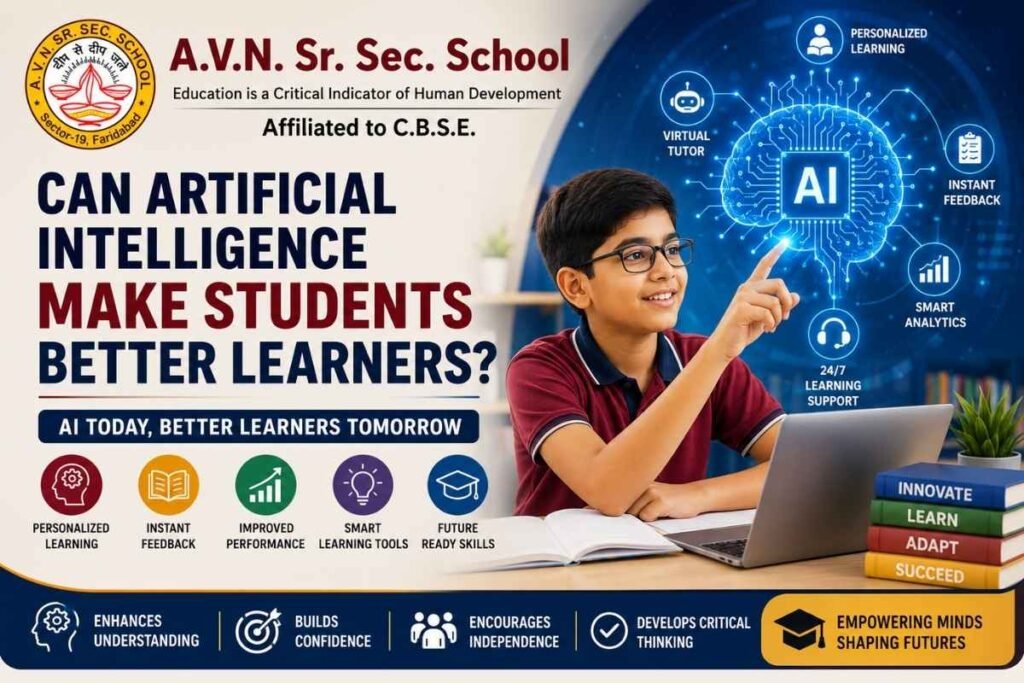
Artificial Intelligence (AI) is changing the way students learn, access information, and develop new skills. From personalized learning platforms to smart educational tools, AI is becoming an important part of modern education. As technology continues to evolve, many parents and educators are asking an important question: Can Artificial Intelligence make students better learners?
The answer is yes, but only when AI is used as a learning aid rather than a replacement for teachers, critical thinking, and human interaction. When used responsibly, AI can help students learn more efficiently, understand concepts better, and develop skills that will be valuable in the future.
Parents looking for a future-focused learning environment often choose the Best School for Kids in Faridabad, where students are encouraged to embrace innovation while building strong academic foundations.
Understanding AI in Education
Artificial Intelligence refers to technology that can analyze information, learn patterns, and assist users in solving problems. In education, AI is used through various tools and applications that support student learning.
Common examples include:
- AI-powered learning apps
- Virtual tutors
- Educational chatbots
- Smart assessment systems
- Personalized learning platforms
- Language learning applications
These tools help students receive additional support and guidance beyond traditional classroom learning.
How AI Helps Students Learn Better
Personalized Learning for Every Student
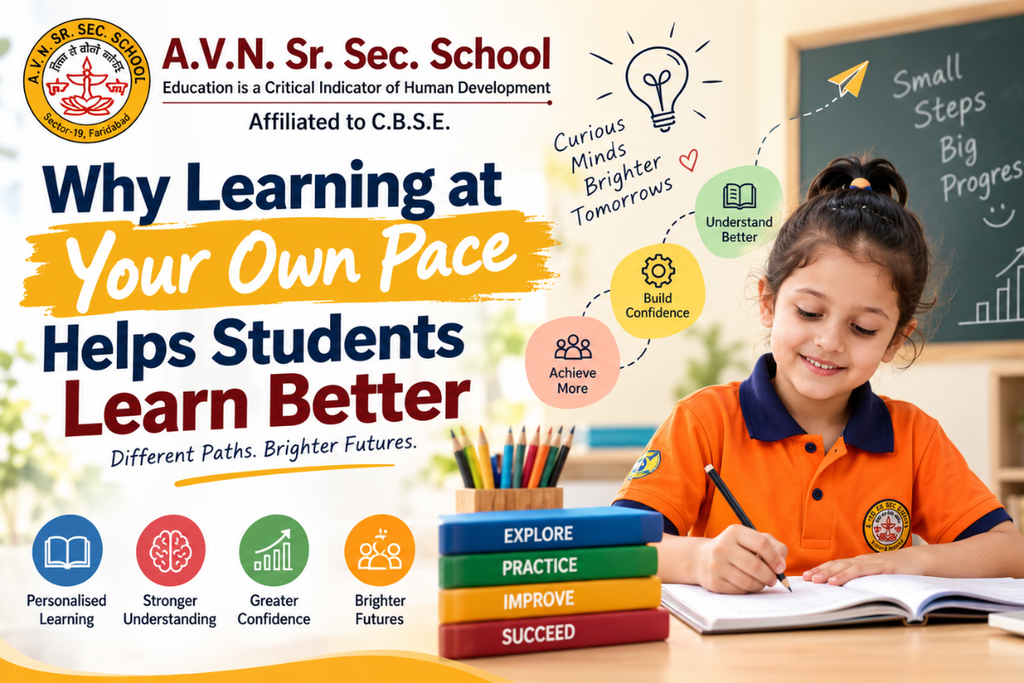
Every child learns differently. Some students understand concepts quickly, while others need extra practice and support.
AI-powered learning platforms can analyze a student’s performance and create customized learning experiences based on their strengths and weaknesses.
Benefits include:
- Learning at an individual pace
- Better understanding of difficult topics
- Improved confidence
- Reduced learning gaps
Personalized learning allows students to focus on areas where they need the most improvement.
Instant Access to Information
One of AI’s biggest advantages is providing quick access to educational resources.
Students can use AI tools to:
- Find explanations for concepts
- Explore new topics
- Practice skills
- Access learning materials
- Receive additional academic support
This makes learning more accessible and flexible than ever before.
Faster Feedback and Improvement
Traditional assessments sometimes take days or weeks to evaluate. AI-powered systems can provide immediate feedback.
Students can quickly identify:
- Mistakes
- Knowledge gaps
- Areas requiring improvement
- Correct answers and explanations
This immediate response helps learners improve more effectively.
Encouraging Independent Learning
AI encourages students to take responsibility for their own learning journey.
With access to educational tools and resources, students can:
- Explore topics independently
- Practice problem-solving
- Develop research skills
- Build self-confidence
These habits promote lifelong learning and self-motivation.
Can AI Improve Academic Performance?
Many studies suggest that students who use educational technology appropriately often experience better learning outcomes.
AI can support academic performance by:
- Simplifying complex concepts
- Providing personalized practice
- Tracking progress
- Offering targeted recommendations
However, success still depends on student effort, teacher guidance, and parental support.
Technology is a tool, not a shortcut to success.
The Importance of Critical Thinking
While AI can provide answers quickly, students must learn how to think critically.
They should ask questions such as:
- Is this information accurate?
- What is the source?
- Are there alternative viewpoints?
- Does the answer make sense?
Critical thinking helps students evaluate information rather than accepting everything they read online.
Schools that encourage analytical thinking help students become smarter users of technology.
AI and Creativity Can Work Together
Some people worry that AI may reduce creativity. In reality, AI can support creative learning when used correctly.
Students can use AI to:
- Brainstorm ideas
- Explore different perspectives
- Organize information
- Support creative projects
However, original ideas and imagination still come from the student.
Parents and educators can further support innovation by learning more about encouraging creative thinking in students.
Challenges Students Must Be Aware Of
Although AI offers many benefits, students should understand its limitations.
AI Can Make Mistakes
AI systems do not always provide accurate information. Students should verify important facts through trusted sources.
Overdependence on Technology
Relying too heavily on AI can reduce problem-solving abilities and independent thinking.
Students should use AI as a support tool rather than allowing it to complete all their work.
Digital Safety Concerns
Students must learn how to use technology responsibly and protect their personal information online.
Parents and schools should teach safe digital habits from an early age.
Preparing Students for Future Careers
AI is transforming industries across the world, including healthcare, business, engineering, finance, and education.
Future careers will require students to understand technology and adapt to changing work environments.
Important future-ready skills include:
- Digital literacy
- Communication
- Creativity
- Problem-solving
- Adaptability
- Collaboration
Students who develop these skills will be better prepared for future opportunities.
Parents can learn more about developing this essential skill through this article on why adaptability matters for students today.
How Schools Can Use AI Responsibly
Schools play a vital role in helping students use AI effectively.
A responsible approach includes:
Teaching AI Awareness
Students should understand:
- What AI is
- How it works
- Its advantages
- Its limitations
For a deeper understanding, parents and students can explore this guide on <a href=”https://avnschoolfaridabad.com/ai-for-children/”>AI for Children</a>.
Balancing Technology and Human Learning
Technology should complement traditional education rather than replace it.
Students still need:
- Classroom discussions
- Teacher guidance
- Group activities
- Hands-on experiences
- Real-world problem-solving
This balanced approach creates stronger learners.
The Role of Modern Schools
Today’s schools must prepare students for a future where technology and human skills work together.
A quality <a href=”https://avnschoolfaridabad.com/cbse-school-in-faridabad/”>CBSE School in Faridabad</a> focuses on academic excellence while also developing digital literacy, leadership, creativity, and critical thinking.
Schools that embrace innovation while maintaining strong educational values help students become confident, responsible learners.
Parents interested in a holistic educational approach can explore the learning environment offered by AVN School, where students are prepared for both academic success and future challenges.
Conclusion
So, can Artificial Intelligence make students better learners?
The answer is yes, when it is used wisely. AI can personalize learning, provide instant feedback, improve engagement, and help students develop important future-ready skills. However, it should never replace critical thinking, creativity, teacher guidance, or human interaction.
The most successful learners will be those who use AI as a tool to enhance their education while continuing to think independently, solve problems creatively, and remain curious about the world around them. By combining technology with strong educational values, students can unlock their full potential and prepare for a successful future.