- Sector-19, Fridabad-121002, Haryana, India
- +91 129 403 7300
- +91 971 759 0012
- Info@avnschoolfaridabad.com
Why CBSE Schools Prioritize Co-Curricular Activities Alongside Academics

Can Artificial Intelligence Make Students Better Learners?
July 13, 2026
Camp By Hindustan Scouts and Guides (Haryana)
July 18, 2026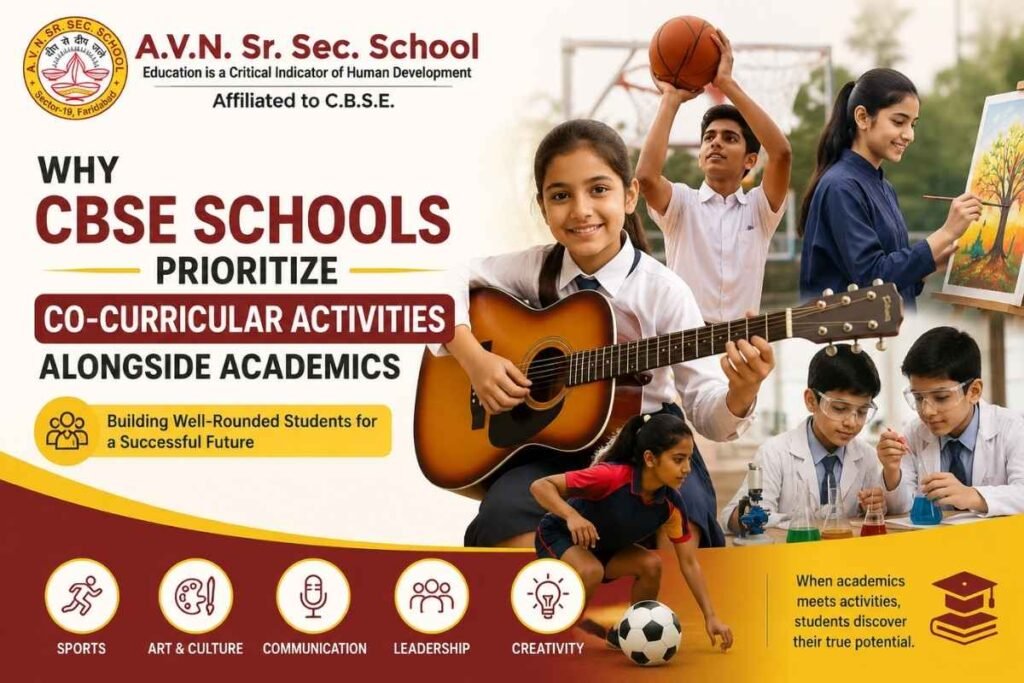
Education today is no longer limited to scoring high marks in examinations. While academic learning remains an important part of a student’s journey, schools are increasingly focusing on the overall development of children. This is why co-curricular activities have become an essential part of the CBSE education system. From sports and arts to music, debates, and leadership programs, these activities help students build skills that go far beyond the classroom.
CBSE schools understand that every child is unique and possesses talents that may not always be reflected in academic performance. By encouraging participation in different activities, schools create opportunities for students to discover their strengths, improve their confidence, and develop important life skills.
Understanding the Importance of Co-Curricular Activities
Co-curricular activities are structured programs that complement classroom learning. They include sports, cultural events, art and craft, music, dance, public speaking, science exhibitions, social service initiatives, and various clubs.
These activities provide practical experiences that help students apply what they learn in their textbooks. They also encourage creativity, teamwork, discipline, and problem-solving abilities. As a result, students become more confident, responsible, and adaptable individuals.
CBSE has consistently promoted holistic education by encouraging schools to create a balanced learning environment where academics and co-curricular activities work together for the overall development of students.
Developing Confidence and Communication Skills
One of the biggest advantages of participating in co-curricular activities is the development of confidence. Whether a student performs on stage, participates in a debate, or represents the school in a sports competition, each experience helps build self-belief.
Public speaking competitions, drama performances, and group discussions improve communication skills. Students learn how to express their thoughts clearly, listen to others, and interact effectively with different groups of people.
These skills are valuable not only during school years but also in higher education and future careers.
Encouraging Leadership and Teamwork
Leadership is not something that can be learned only through textbooks. It develops through practical experiences and responsibilities.
Co-curricular activities provide students with opportunities to lead teams, organize events, manage projects, and coordinate with peers. School clubs, sports teams, and cultural programs often require students to take initiative and make decisions.
At the same time, students learn the importance of teamwork. They understand how to collaborate, respect different perspectives, and work toward common goals. These experiences prepare them for real-world situations where teamwork and leadership are highly valued.
Supporting Physical Health and Well-Being
In an age where children spend significant time on digital devices, physical activity has become more important than ever. Sports and fitness programs play a crucial role in maintaining students’ physical health.
Regular participation in sports helps improve stamina, strength, coordination, and overall fitness. It also teaches discipline, perseverance, and sportsmanship.
Beyond physical benefits, sports contribute to mental well-being by reducing stress and promoting a positive mindset. Students who engage in physical activities often demonstrate better concentration and improved academic performance.
Enhancing Creativity and Innovation
Creativity is an essential skill in the modern world. Activities such as painting, music, dance, theatre, creative writing, and science projects encourage students to think differently and express themselves freely.
Creative activities allow children to explore their imagination and develop innovative thinking. They learn to approach challenges from multiple perspectives and find unique solutions.
This ability to think creatively is increasingly important in today’s rapidly changing world, where innovation drives success across industries.
Improving Academic Performance
Many parents assume that spending time on co-curricular activities may distract students from academics. However, research and practical experience often show the opposite.
Students involved in balanced co-curricular programs tend to develop better time-management skills, improved concentration, and stronger discipline. These qualities positively influence their academic performance.
Participation in activities helps reduce stress and prevents burnout, allowing students to remain motivated and engaged in their studies. A healthy balance between academics and extracurricular involvement often leads to better overall outcomes.
Building Social and Emotional Skills
School is one of the first environments where children learn to interact with people outside their families. Co-curricular activities create opportunities for students to build friendships, understand emotions, and develop social skills.
Through participation in group activities, students learn empathy, patience, cooperation, and conflict resolution. They become more aware of different viewpoints and cultures, helping them grow into respectful and responsible individuals.
These social and emotional skills play a significant role in personal happiness and professional success later in life.
Preparing Students for Future Careers
The professional world today values much more than academic qualifications. Employers and universities increasingly look for individuals who possess communication skills, leadership qualities, creativity, adaptability, and teamwork abilities.
Co-curricular activities help students develop these competencies from an early age. Whether participating in a science fair, leading a student council, competing in sports, or performing in cultural events, students gain experiences that contribute to their future success.
This is one reason why institutions recognized as a leading CBSE institution in Faridabad place strong emphasis on holistic development alongside academic excellence.
Creating a Balanced Learning Environment
A balanced educational experience ensures that students do not feel overwhelmed by academic pressure alone. Co-curricular activities provide opportunities for relaxation, enjoyment, and self-expression.
When children enjoy coming to school and participating in various activities, they develop a positive attitude toward learning. This enthusiasm often translates into greater engagement in academics as well.
Schools that focus on balanced education create an environment where students feel motivated to learn, explore, and grow.
The Role of Parents and Schools
The success of co-curricular programs depends on the combined efforts of schools and parents. Schools provide opportunities and guidance, while parents encourage participation and support their children’s interests.
Rather than focusing solely on examination results, parents should recognize the long-term value of activities that help children build confidence, creativity, and character.
Many parents searching for a top learning environment for young children in Faridabad often look for institutions that offer a strong combination of academics, sports, arts, and personality development programs.
Why Holistic Education Matters More Than Ever
The future demands individuals who can think critically, communicate effectively, collaborate with others, and adapt to changing situations. Academic knowledge provides a foundation, but co-curricular activities help students develop the practical skills needed to succeed in life.
Schools that embrace holistic education create well-rounded individuals who are confident, responsible, and prepared for future challenges. This approach has become a defining characteristic of a modern CBSE-affiliated institution serving Faridabad NCR and Haryana and a progressive CBSE learning campus in Faridabad, Haryana.
Conclusion
Co-curricular activities are no longer optional additions to education. They are an essential part of a student’s overall development. While academics provide knowledge, co-curricular experiences build confidence, creativity, leadership, teamwork, and emotional intelligence.
CBSE schools prioritize these activities because they understand that true success comes from developing the whole child. By creating a balance between classroom learning and practical experiences, schools help students become capable, confident, and future-ready individuals who can thrive in every aspect of life.