- Sector-19, Fridabad-121002, Haryana, India
- +91 129 403 7300
- +91 971 759 0012
- Info@avnschoolfaridabad.com

How to Encourage Creative Thinking in School Students

SIP Abacus Classes Now at AVN School!
May 30, 2026
Why Adaptability Is the Most Important Skill Students Can Develop Today
June 11, 2026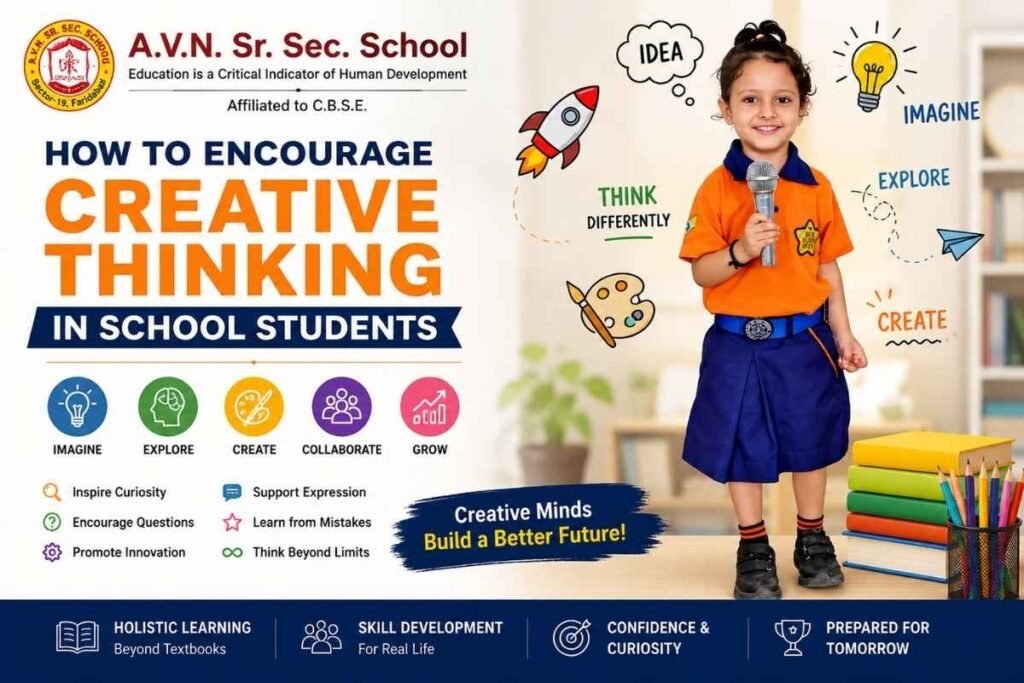
Creative thinking is one of the most valuable skills students can develop during their educational journey. In a rapidly changing world, the ability to think creatively helps students solve problems, adapt to new situations, and generate innovative ideas. While academic knowledge remains important, creativity enables students to apply what they learn in meaningful and practical ways. Schools, teachers, and parents all play an important role in nurturing this skill from an early age.
Understanding Creative Thinking
Creative thinking is the ability to look at situations from different perspectives and develop unique solutions or ideas. It involves imagination, curiosity, critical thinking, and the willingness to explore possibilities. Contrary to common belief, creativity is not limited to artistic activities such as drawing or music. It can be applied to science, mathematics, language, technology, and everyday problem-solving.
Students who develop creative thinking skills are often better equipped to handle challenges because they can approach problems with flexibility and confidence. They learn to think beyond standard answers and explore multiple solutions before making decisions.
Creating a Learning Environment That Encourages Creativity
A supportive learning environment is one of the most effective ways to encourage creative thinking. Students are more likely to share ideas when they feel comfortable expressing themselves without fear of criticism. Teachers can create such an environment by encouraging open discussions, asking thought-provoking questions, and valuing different viewpoints.
When students understand that there may be more than one correct answer to a problem, they become more willing to experiment with new ideas. This approach helps build confidence and encourages intellectual curiosity.
Encouraging Curiosity Through Questions
Curiosity is the foundation of creativity. Students naturally ask questions about the world around them, and these questions provide opportunities for learning and exploration. Encouraging students to ask “why,” “how,” and “what if” questions helps them think more deeply about concepts and situations.
Instead of providing immediate answers, educators can guide students toward discovering solutions on their own. This process develops independent thinking and strengthens their ability to analyze information critically. Over time, students become active learners rather than passive recipients of information.
Promoting Problem-Solving Activities
Problem-solving activities are excellent tools for developing creative thinking. Real-world challenges, puzzles, case studies, and project-based assignments encourage students to apply knowledge in practical situations. These activities require them to evaluate options, test ideas, and adapt strategies when necessary.
When students are given opportunities to solve problems independently or in groups, they learn that creativity often comes from experimentation and persistence. They also gain valuable experience in handling uncertainty and overcoming obstacles.
Integrating Arts and Creative Expression
Art, music, drama, and creative writing provide students with opportunities to express themselves in unique ways. These activities stimulate imagination and help students explore ideas beyond traditional academic boundaries.
Creative expression also supports emotional development. Students who engage in artistic activities often become more confident in sharing their thoughts and perspectives. This confidence can positively influence their performance in other academic subjects as well.
Schools that provide opportunities for creative expression help students develop a balanced skill set that includes both analytical and imaginative thinking.
Supporting Collaborative Learning
Collaboration plays a significant role in fostering creativity. Group projects and team-based activities expose students to different viewpoints and ideas. When students work together, they learn to combine perspectives, brainstorm solutions, and build on one another’s suggestions.
Collaborative learning encourages communication and adaptability. It teaches students that creativity often emerges through discussion and shared experiences. These interactions help students develop interpersonal skills while strengthening their ability to think creatively.
Using Technology as a Creative Tool
Technology can be a powerful resource for encouraging creativity when used thoughtfully. Digital tools allow students to create presentations, design projects, produce videos, and explore interactive learning experiences. These activities help students communicate ideas in innovative ways.
However, technology should complement rather than replace traditional learning methods. A balanced approach ensures that students continue to develop critical thinking, communication, and interpersonal skills alongside their digital abilities.
Allowing Students to Learn from Mistakes
Fear of failure can limit creativity. Students may hesitate to share ideas if they believe mistakes will be judged negatively. Schools can encourage creative thinking by treating mistakes as valuable learning opportunities.
When students understand that experimentation is part of the learning process, they become more willing to take risks and explore new approaches. This mindset helps build resilience and confidence. It also teaches students that innovation often results from trial, error, and continuous improvement.
Encouraging Independent Projects
Independent projects allow students to explore topics that genuinely interest them. Whether researching a scientific concept, creating a model, or developing a community initiative, these projects encourage ownership of learning.
Independent exploration gives students the freedom to make decisions, solve problems, and manage their own work. These experiences strengthen creative thinking because students must rely on their curiosity and resourcefulness throughout the process.
The Role of Teachers and Parents
Teachers and parents are essential partners in developing creativity. Teachers provide structured opportunities for exploration within the classroom, while parents can reinforce these experiences at home. Encouraging reading, discussions, hobbies, and exploration outside school helps students continue developing creative skills in everyday life.
Supportive adults who listen to students’ ideas and encourage experimentation help create an environment where creativity can thrive. Positive reinforcement and constructive feedback motivate students to continue exploring and learning.
Creativity and Future Success
Creative thinking is increasingly recognized as a critical skill for future success. Modern careers often require individuals to solve complex problems, adapt to change, and develop innovative solutions. Students who learn to think creatively are better prepared for these challenges.
Educational environments that encourage curiosity, exploration, and independent thinking help students develop the confidence needed to navigate an evolving world. Understanding the importance of such environments can be seen through institutions like the CBSE School in Faridabad, where learning extends beyond memorization. Evaluating educational approaches similar to the Best CBSE School in Faridabad highlights the value of balancing academics with skill development. Early learning settings comparable to the Best School for Kids in Faridabd can also play an important role in nurturing imagination and curiosity from a young age. Broader discussions about quality education often reference institutions such as the Best School in Faridabd when examining how structured learning supports overall student growth.
Conclusion
Encouraging creative thinking in school students requires a combination of supportive teaching practices, engaging learning experiences, and opportunities for exploration. By promoting curiosity, problem-solving, collaboration, and independent learning, schools can help students develop skills that extend far beyond academics. Creative thinkers are better equipped to adapt, innovate, and succeed in a rapidly changing world. Investing in creativity today helps prepare students for the opportunities and challenges of tomorrow.