- Sector-19, Fridabad-121002, Haryana, India
- +91 129 403 7300
- +91 971 759 0012
- Info@avnschoolfaridabad.com

How Experiential Learning Makes Education Practical

🌸 Mother’s Day Celebration – Pre Primary Wing 🌸
May 26, 2026
विद्यार्थियों के सर्वांगीण विकास हेतु एक दिवसीय योग एवं नैतिक मूल्य शिविर
May 30, 2026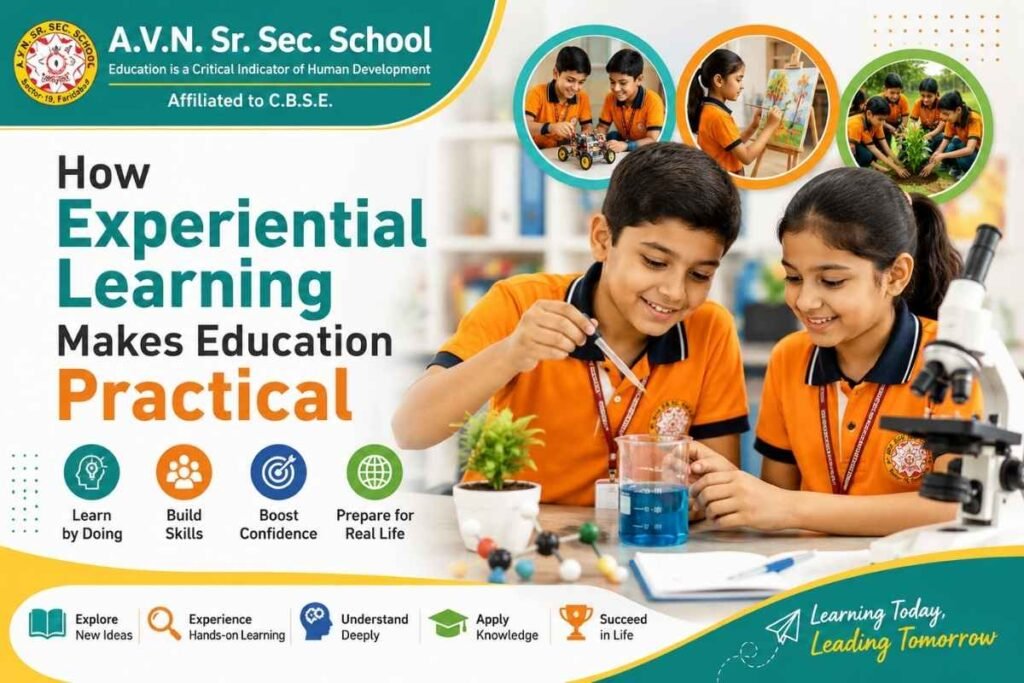
Education is no longer limited to textbooks, blackboards, and memorizing answers for exams. Today, parents and educators understand that children learn better when they actively participate in the learning process. This is where experiential learning plays an important role. It focuses on “learning by doing,” helping students connect classroom knowledge with real-life experiences.
Experiential learning makes education more engaging, meaningful, and practical. Instead of simply reading concepts from books, students perform activities, experiments, group projects, role plays, presentations, field visits, and hands-on tasks that help them understand concepts deeply. This modern approach is transforming schools and preparing students for real-world challenges.
What Is Experiential Learning?
Experiential learning is a method where students learn through direct experiences rather than passive memorization. It encourages students to explore, observe, experiment, and reflect on what they learn. This process helps children develop critical thinking, creativity, communication skills, and problem-solving abilities.
For example, instead of only reading about plants in a science chapter, students may grow plants in the school garden and observe the growth process themselves. Instead of memorizing mathematical formulas, they may use practical activities to understand how calculations work in daily life.
This approach makes learning more enjoyable and easier to remember because students actively participate in the process.
Why Practical Learning Matters Today
The world is changing rapidly, and students need more than academic knowledge to succeed. They must develop practical skills, confidence, teamwork, adaptability, and decision-making abilities. Traditional learning methods often focus heavily on theory, while experiential learning prepares students for real-life situations.
Practical learning helps students:
- Understand concepts more clearly
- Improve memory retention
- Build confidence
- Develop communication skills
- Strengthen creativity
- Learn teamwork and leadership
- Improve analytical thinking
When students experience learning in practical ways, they become more curious and motivated to learn.
How Experiential Learning Makes Education Fun
One of the biggest advantages of experiential learning is that it makes education exciting for students. Children naturally enjoy activities where they can interact, explore, and participate.
Activity-Based Classrooms
Interactive classrooms create a lively learning environment. Activities such as quizzes, storytelling, science experiments, debates, and educational games make lessons more interesting. Students remain engaged and develop a positive attitude toward learning.
Learning Through Projects
Project-based learning allows students to work on real-world topics and create practical solutions. Whether it is building models, conducting research, or preparing presentations, projects encourage teamwork and creativity.
Educational Trips and Outdoor Learning
Field trips, museum visits, industrial tours, and nature walks give students practical exposure beyond classrooms. These experiences help children understand concepts in a better and more memorable way.
Technology Integration
Modern schools use smart classrooms, virtual learning tools, and digital activities to make education interactive. Technology supports visual and practical learning, helping students understand difficult topics more easily.
Building Life Skills Through Experiential Learning
Experiential learning does not only improve academic performance; it also develops important life skills that students need in the future.
Communication Skills
Group discussions, presentations, and classroom activities help students express their ideas confidently. They learn how to communicate effectively with teachers and peers.
Problem-Solving Ability
Hands-on tasks encourage students to think critically and find solutions independently. This improves their analytical and decision-making skills.
Leadership and Teamwork
Collaborative activities teach students how to work in teams, manage responsibilities, and support each other. These experiences build leadership qualities from an early age.
Emotional Growth
Practical learning experiences help students become more confident, independent, and emotionally strong. They learn to handle challenges and develop resilience.
The Role of Schools in Experiential Learning
Schools play a major role in creating an environment where experiential learning can thrive. Teachers act as mentors and facilitators instead of simply delivering lectures. Modern classrooms focus on interaction, creativity, and student participation.
Parents today are actively searching for schools that provide practical learning opportunities along with strong academics. A school that combines academic excellence with experiential learning helps children become well-rounded individuals.
If you are looking for a quality-focused learning environment, choosing the Best School in Faridabd can make a significant difference in your child’s overall growth and development.
Experiential Learning and CBSE Education
The CBSE curriculum also emphasizes experiential and competency-based learning. Schools are encouraged to use activity-based teaching methods that improve conceptual understanding instead of rote memorization.
A good CBSE School in Faridabad focuses on practical learning strategies that help students apply their knowledge in real-life situations. This balanced approach supports both academic performance and skill development.
Experiential learning also aligns with the National Education Policy (NEP), which promotes holistic and student-centered education in India.
How Parents Benefit from Experiential Learning
Parents often notice positive changes in children who study in experiential learning environments. Students become more confident, active, responsible, and eager to learn. They are less stressed about studies because learning feels natural and enjoyable.
Children also develop better social skills and become more independent in handling everyday tasks and responsibilities.
When parents choose the Best CBSE School in Faridabad, they often look for a school that provides practical exposure along with academic discipline. Experiential learning creates a strong foundation for future success.
Experiential Learning for Young Children
Practical learning is especially important during the early years of education. Young children learn best through play, exploration, and interaction. Activities like storytelling, role play, drawing, music, and sensory learning improve their understanding and creativity.
A nurturing environment helps children develop curiosity and confidence from an early age. Choosing the Best School for Kids in Faridabd ensures that children receive the right balance of academics, creativity, and practical learning experiences.
The Future of Education
The future of education is moving toward innovation, creativity, and skill-based learning. Schools that adopt experiential learning methods are preparing students not only for exams but also for life.
Students who learn practically are better equipped to face future challenges, adapt to changing environments, and succeed in their careers. They become independent thinkers who can apply their knowledge effectively in real-world situations.
Experiential learning also helps students discover their interests and strengths early, allowing them to make informed career choices in the future.
Conclusion
Experiential learning is transforming education by making it more practical, interactive, and meaningful. Instead of focusing only on memorization, this approach encourages students to learn through real experiences, activities, and participation.
Practical learning improves understanding, builds confidence, develops life skills, and creates a love for learning. It prepares students not only for academic success but also for personal and professional growth.
As education continues to evolve, experiential learning will remain one of the most effective ways to help children become confident, capable, and future-ready individuals.