- Sector-19, Fridabad-121002, Haryana, India
- +91 129 403 7300
- +91 971 759 0012
- Info@avnschoolfaridabad.com
How AVN School Is Inspiring Creativity and Innovation in Students

Funding Their Future: The Real Return on Your CBSE School Investment
August 12, 2026
Celebrating Freedom, Excellence & Unity
August 20, 2026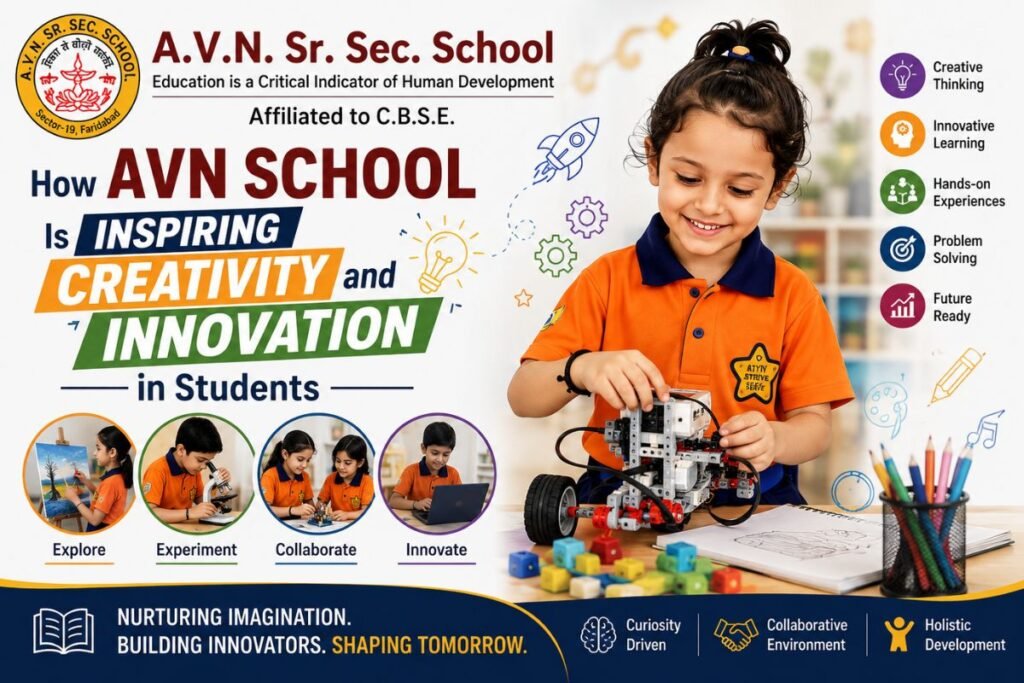
Education is no longer limited to textbooks, examinations, and memorising information. Today, students need to think independently, solve problems, communicate ideas, and adapt to a rapidly changing world. Creativity and innovation have therefore become important parts of meaningful education. At AVN School, students are encouraged to explore ideas, ask questions, experiment with different approaches, and learn through experiences.
As a modern School in Faridabad, AVN School focuses on creating an environment where students can develop both academic knowledge and the skills they need for their future. The goal is not simply to help students score well in examinations but also to help them become confident, curious, and independent thinkers.
Why Creativity Matters in Modern Education
Creativity is often associated with art, music, or writing, but its role in education is much broader. A creative student is able to look at a problem from different perspectives and think of more than one possible solution.
In the classroom, creativity can encourage students to:
- Ask meaningful questions
- Explore new ideas
- Find different solutions to problems
- Express their thoughts confidently
- Connect concepts from different subjects
- Learn from mistakes
- Develop independent thinking
These abilities can be useful across subjects. A student solving a mathematics problem, conducting a science experiment, preparing a presentation, or writing a story can all benefit from creative thinking.
Encouraging Students to Think Beyond Textbooks
Traditional learning can sometimes make students focus primarily on finding the correct answer. While academic accuracy is important, real-world situations do not always have one simple solution.
AVN School encourages students to understand concepts instead of simply memorising them. Classroom discussions, activities, projects, presentations, and practical learning opportunities can give students the chance to apply what they learn.
When students are encouraged to explain why something works rather than simply remembering what works, learning becomes more meaningful.
This approach also allows students to develop the confidence to share their opinions. Even when an idea is not perfect, discussing it can help students understand what they could improve.
Learning Through Projects and Activities
Project-based learning can be an effective way to connect classroom concepts with practical experiences. Instead of learning a topic only through a textbook, students can explore it through research, teamwork, experimentation, and presentations.
For example, a science project may encourage students to observe a problem, research possible solutions, conduct an experiment, and present their findings. Similarly, a social science project may involve researching a community issue and suggesting practical solutions.
Such activities help students understand that education is not only about completing assignments. It is also about discovering information, asking questions, making decisions, and communicating ideas.
Innovation Through Technology and Modern Learning
Technology has changed the way students access and use information. Digital tools can support learning when they are used thoughtfully and with clear educational objectives.
Innovation in education does not simply mean introducing more technology into classrooms. It means using the right tools and teaching methods to make learning more interactive, accessible, and engaging.
Students can use digital resources to research topics, create presentations, develop projects, visualise difficult concepts, and collaborate with their classmates. These experiences can also help them become responsible and thoughtful users of technology.
At AVN School, an innovative learning environment can help students understand how technology can be used not only for entertainment but also for research, creativity, communication, and problem-solving.
Developing Problem-Solving Skills
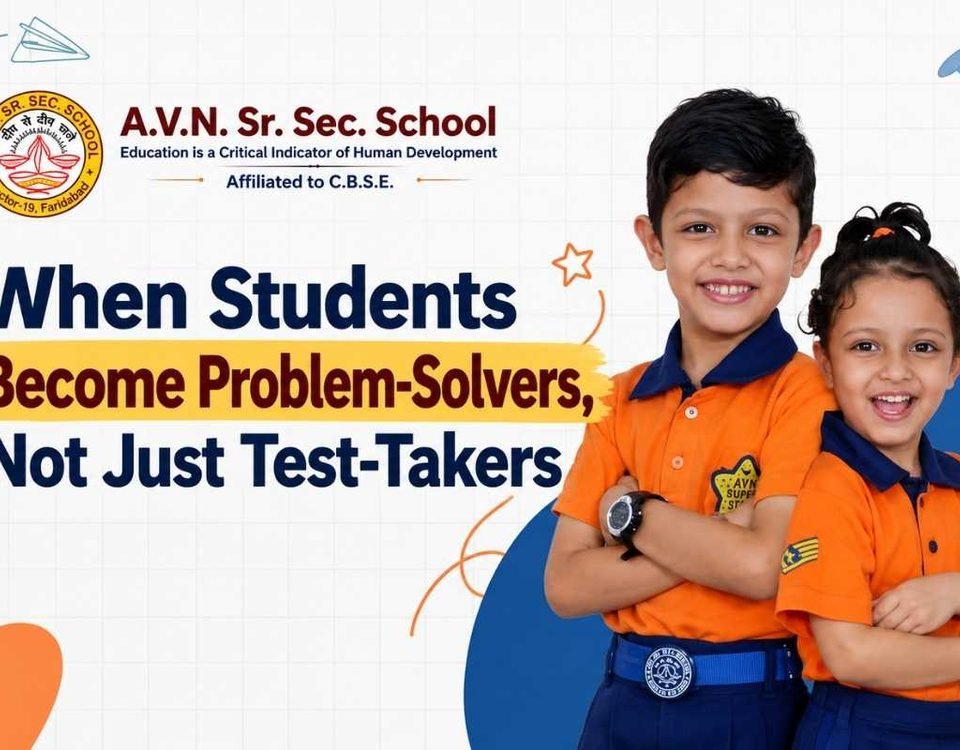
One of the biggest benefits of creative learning is the development of problem-solving skills.
Students regularly face challenges in academics and everyday life. Giving them opportunities to analyse situations and develop their own solutions can prepare them to handle these challenges more effectively.
Teachers can encourage this by asking open-ended questions and giving students opportunities to explain their reasoning.
For instance, instead of immediately providing a solution to a problem, students can be asked:
“What would you do differently?”
“Can you find another way to solve this?”
“What might happen if we change one part of the situation?”
Questions like these encourage students to move beyond memorised answers and develop deeper thinking skills.
Creativity Beyond Academics
Creativity is not restricted to academic subjects. Co-curricular activities also provide students with opportunities to discover their interests and talents.
Activities involving art, music, dance, drama, sports, public speaking, debates, quizzes, and other forms of expression can help students develop confidence and communication skills.
Participating in different activities can also help students discover abilities they may not have recognised through traditional classroom learning.
A student who may be quiet during academic discussions might become confident while participating in a stage performance or sports activity. Another student may discover an interest in designing, writing, technology, or public speaking.
Providing these opportunities allows students to develop as individuals rather than being defined only by their examination results.
The Role of Teachers in Encouraging Innovation
Teachers play an important role in creating a classroom where creativity can grow. Students are more likely to share ideas when they feel that their opinions are respected.
Instead of treating every mistake as a failure, teachers can use mistakes as opportunities for learning. This helps students become less afraid of experimenting and trying new approaches.
At AVN School, teachers can act not only as instructors but also as mentors who encourage students to question, explore, and discover.
A supportive teacher can make a significant difference by recognising individual strengths and giving students opportunities to take responsibility for their learning.
Building Collaboration and Communication
Innovation rarely happens in isolation. Many real-world ideas are developed when people with different perspectives work together.
Group projects and classroom activities can therefore teach students how to listen to others, communicate their ideas, divide responsibilities, and work towards a common goal.
These experiences help develop interpersonal skills that students may need later in higher education and professional environments.
Learning to disagree respectfully is also important. Students can discover that different people may approach the same problem in completely different ways, and those differences can lead to better solutions.
Preparing Students for a Changing Future
The future workplace will continue to change as technology, artificial intelligence, and new industries develop. Students entering that world will need more than subject knowledge.
They will need adaptability, creativity, communication, critical thinking, collaboration, and problem-solving skills.
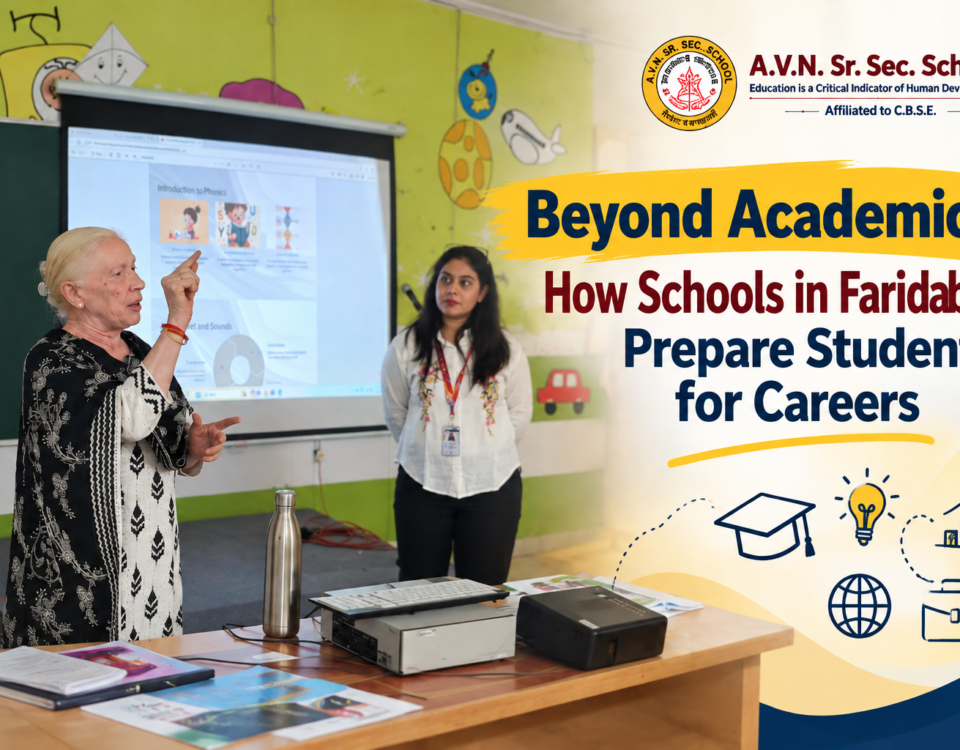
This is why innovation in education is becoming increasingly important. A CBSE School in Faridabad can provide students with a strong academic foundation while also creating opportunities to develop these broader skills.
The objective should be to prepare students not only for the next examination but also for situations where they need to think independently and make informed decisions.
Creating a Culture of Curiosity
Perhaps the most valuable part of creative education is developing curiosity.
A curious student does not stop learning when the lesson ends. They want to know how things work, why something happens, and what could be done differently.
Schools can encourage this curiosity by making students active participants in the learning process. Classroom discussions, experiments, projects, competitions, creative activities, and practical experiences can all contribute to this environment.
When students learn to enjoy asking questions, they are more likely to continue learning throughout their lives.
Conclusion
Creativity and innovation are becoming essential parts of modern education. They help students move beyond memorisation and develop the ability to think, explore, communicate, and solve problems.
AVN School aims to provide students with opportunities to learn both inside and outside the traditional classroom. Through practical activities, technology-supported learning, projects, co-curricular opportunities, collaboration, and supportive teaching, students can be encouraged to discover their abilities and develop confidence in their ideas.
The ultimate purpose of education is not simply to produce students who know the right answers. It is to develop young people who can ask the right questions, approach challenges creatively, and use their knowledge responsibly.
By encouraging creativity and innovation from an early stage, AVN School can help students build the mindset and skills required to become confident learners and capable individuals in an increasingly changing world.